

Jordan Ahli Bank Numismatic Museum
History Engraved in Metal

Establishment of the Jordan Ahli Bank Numismatic Museum
The credit goes to the wisdom, guidance, and foresight of His Excellency Dr. Al-Ma’sher, who recognized the historical and cultural value of Dr. Naif Al-Qsous’s collection, which he had assembled over a period of thirty years. His Excellency accordingly directed the establishment of the Jordan Ahli Bank Numismatic Museum, with this collection serving as its cornerstone. This initiative reflected the management’s strong belief in the museum’s role in preserving Jordan’s and humanity’s cultural heritage. The museum was officially inaugurated at the beginning of 1999.

A Journey Through Minted History Through More Than 40,000 Artifacts
Since the establishment of Jordan Ahli Bank, its management has embraced a clear vision that balances economic responsibility with cultural and social responsibility toward Jordanian society. The Bank has consistently translated this vision into tangible initiatives.
-
Learn More
Within this framework, and under the chairmanship of His Excellency Dr. Rajai Muasher at the time, the Bank recognized the historical and cultural value of the collection assembled by Dr. Nayef Al-Qassous over more than three decades. Consequently, the initiative to establish the Jordan Ahli Bank Numismatic Museum was launched, with this collection forming its foundation. The museum officially opened in early 1999 as a pioneering step toward preserving Jordanian and human heritage.
Today, the museum stands as a unique landmark in the region, with collections comprising more than 43,000 coins. This experience represents an exceptional example of productive collaboration between the passion of researchers and numismatics specialists and institutional support, resulting in a cultural and scientific center that effectively serves society and academic research.
The Jordan Ahli Bank Numismatic Museum is a specialized museum whose collections span more than 2,500 years, with the oldest coin dating back to 600 BC, in addition to modern commemorative issues.
More than 3,500 coins are displayed across 25 display cases in the museum hall. The museum walls are adorned with enlarged images of coins accompanied by concise explanations in both Arabic and English.
The museum’s library is specialized and contains works by leading scholars in the field of numismatics, as well as specialized periodicals, totaling more than 3,000 volumes.
The museum is open to the public, allowing visitors to enjoy viewing the numismatic collections and to learn about the history of nations and civilizations. Specialists and researchers in the field benefit greatly from these collections, having recognized their importance as historical documents and a rich source of information.
The Museum’s Mission
The museum’s mission is to preserve Jordan’s national and cultural heritage in particular, and human heritage in general, through the care, study, documentation, and scientific preservation of ancient coins and numismatic materials from civilizations that succeeded one another in the Middle East. Coins are treated as official historical documents and are conserved scientifically in special vaults after undergoing necessary chemical or manual restoration.
The museum also supports research conducted by its professional staff by acquiring specialized books, subscribing to international numismatic journals, and assisting students, postgraduate researchers (master’s and PhD), and scholars in numismatics and archaeology by providing access to artifacts, references, and research materials required for academic studies.
The museum houses several collections considered among the finest known globally, including:
- Nabataean coinage.
- Coinage of the Decapolis cities and the Arab provinces (Roman period).
- Copper coinage from the Umayyad period.
- A collection of weights from various civilizations.
What Is Numismatics?
Numismatics is defined as the study of coins, token money, medals, banknotes, seals, decorations, as well as standardized media of exchange such as weights and measures and similar objects that served comparable functions.
Museum Publications
Explore the museum’s most prominent publications:
- “New Umayyad Copper Coinage from a Private Collection: A Contribution to Reassessing the Coinage of the Levant”, by Dr. Nayef Al-Qassous (2004).
- “Unpublished and Rare Islamic Coins”, by Dr. Nayef Al-Qassous, Dr. Hassan Al-Zyoud, and Ms. Aida Naghawi (2014).
- “Inedited and Rare Ancient, Classical and Byzantine Coins”, by Dr. Nayef Al-Qassous, Dr. Hassan Al-Zyoud, and Ms. Aida Naghawi (2014).
- “The Era of Harun Al-Rashid Through Historical Sources and Coinage”, by Dr. Hassan Al-Zyoud (2017).
- “The Story of Money: From Barter to the Present Day”, by Dr. Nayef Al-Qassous (2018).
- “The Coinage of the City of Amman”, by Dr. Hassan Al-Zyoud (2021).
- “The Coinage of the City of Madaba”, by Dr. Hassan Al-Zyoud (2026).
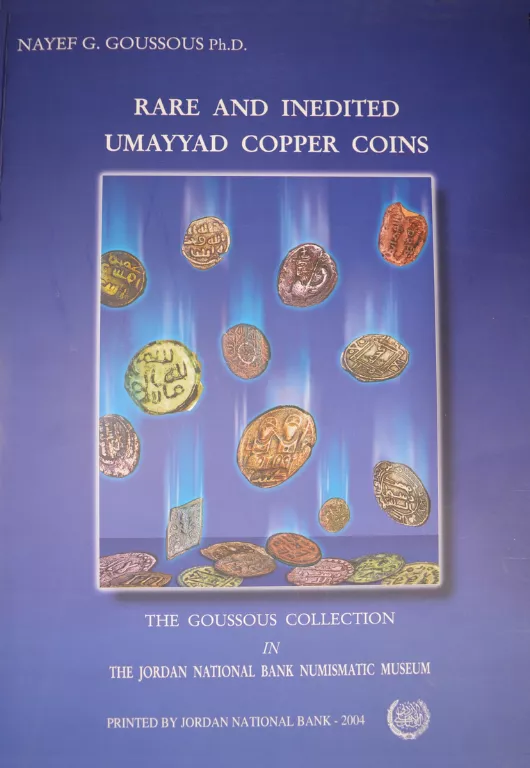
New Umayyad Copper Coinage from a Private Collection: A Contribution to Reassessing the Coinage of the Levant
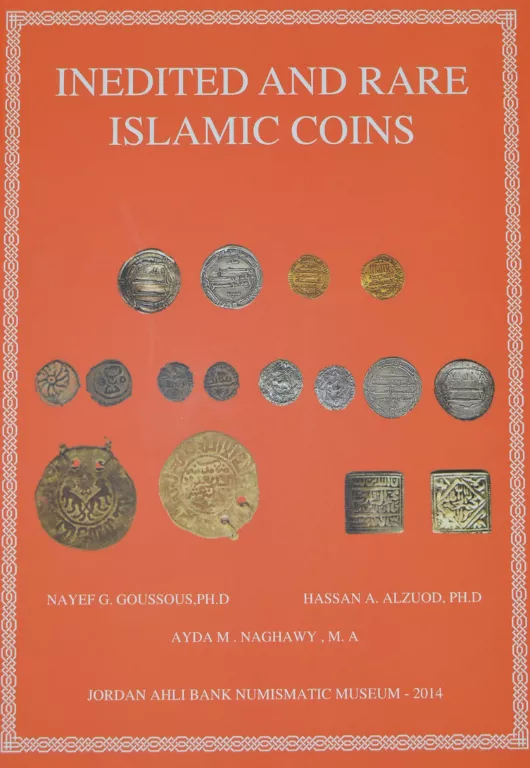
Unpublished and Rare Islamic Coins
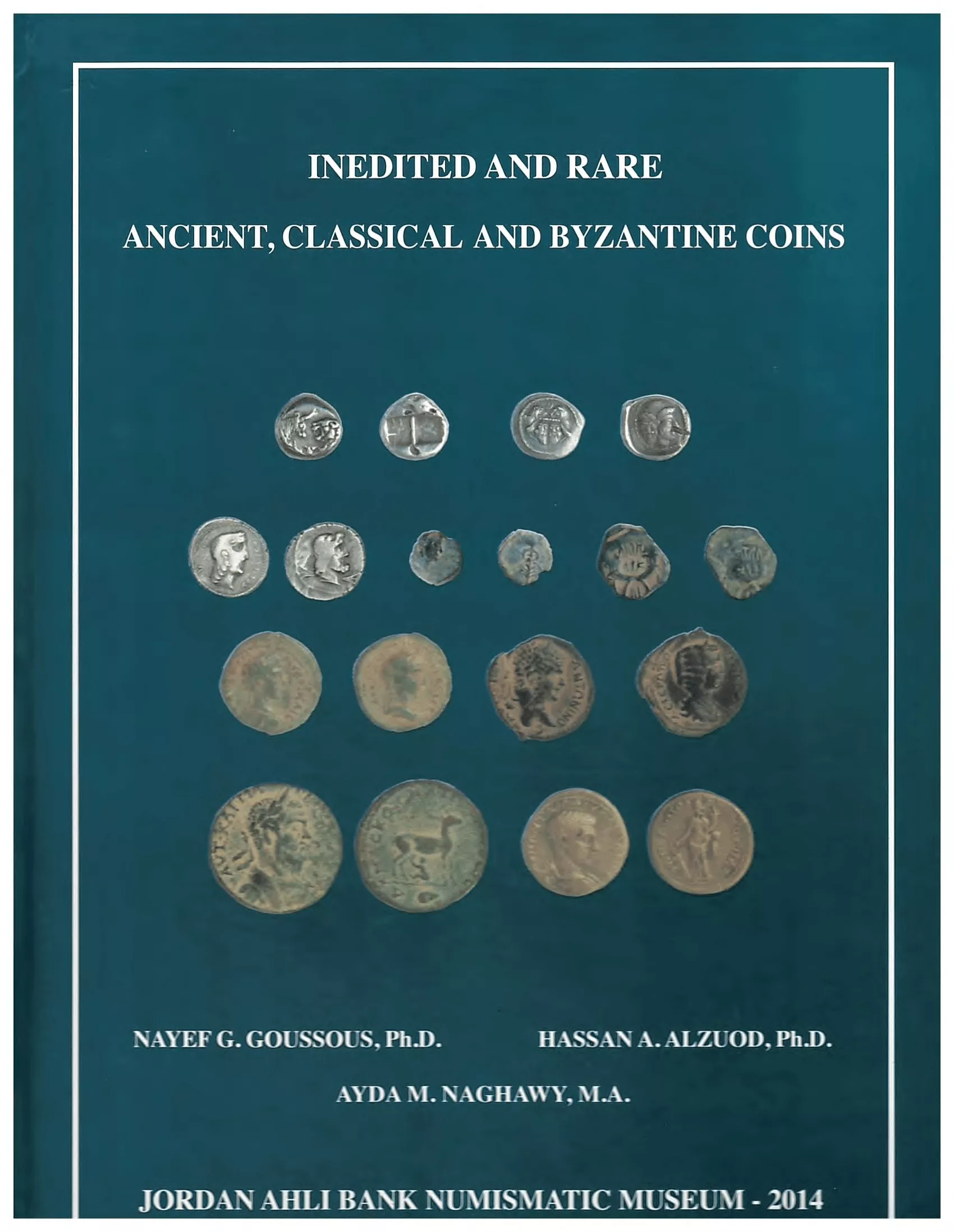
Inedited and Rare Ancient, Classical and Byzantine Coins
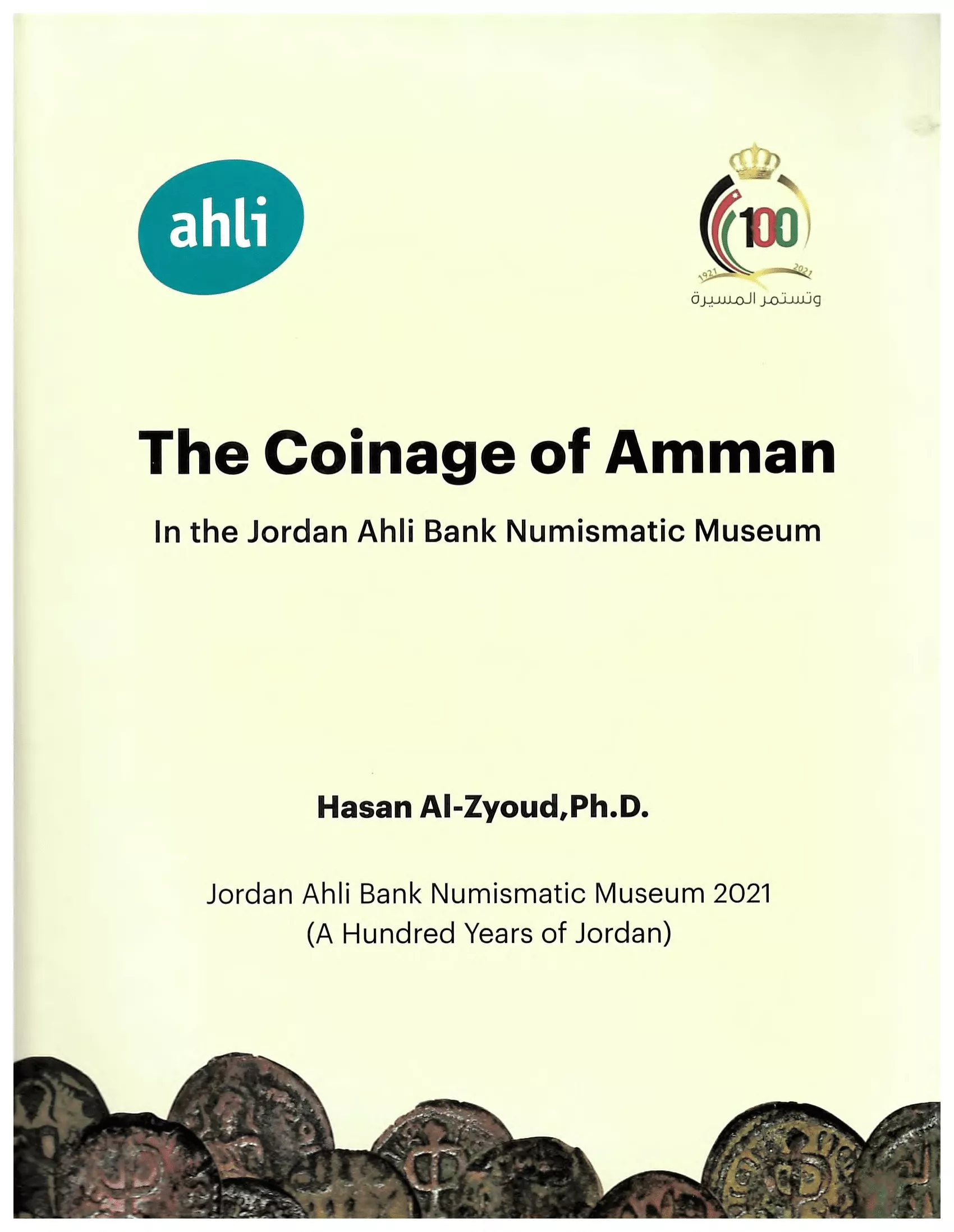
The Coinage of the City of Amman

The Story of Money: From Barter to the Present Day
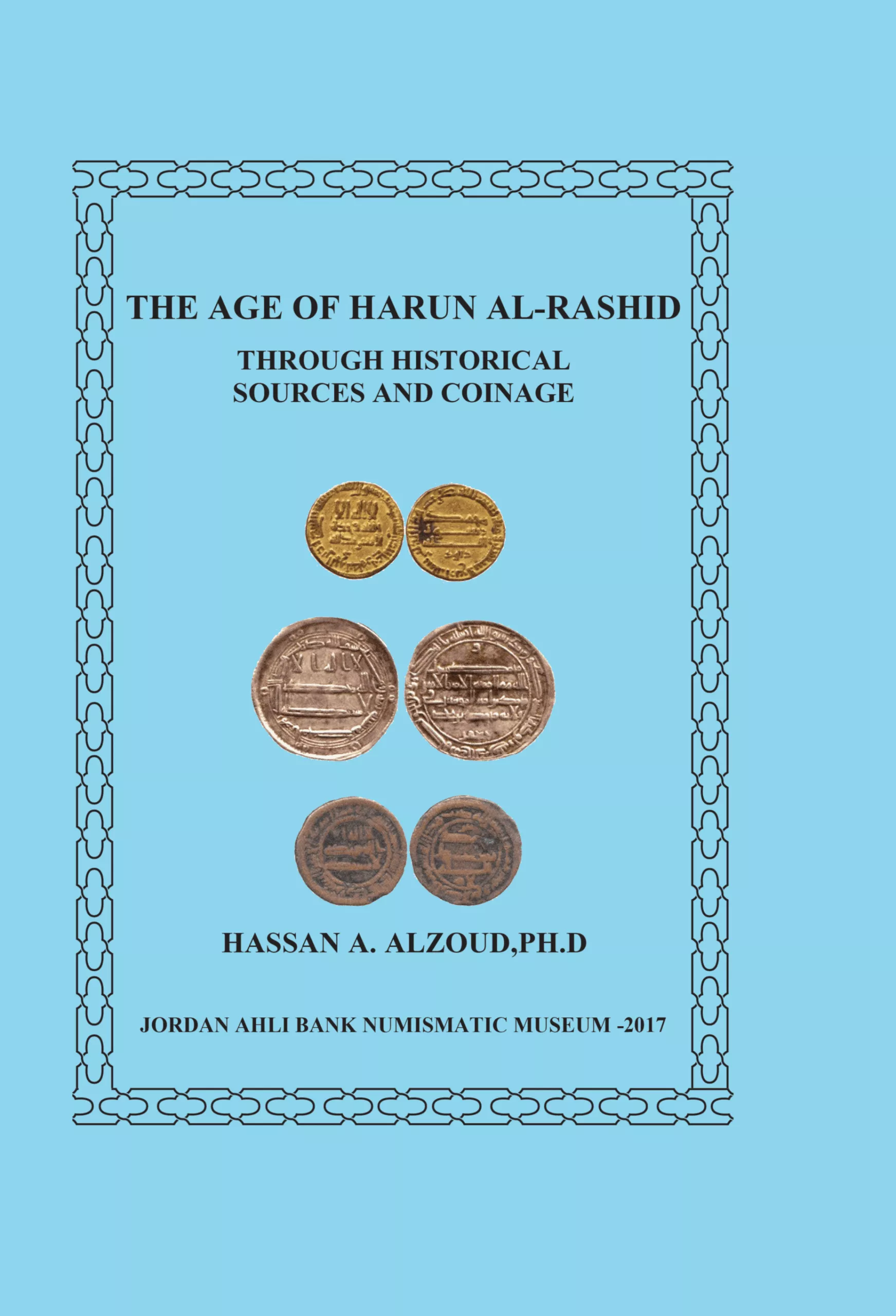
The Era of Harun Al-Rashid Through Historical Sources and Coinage
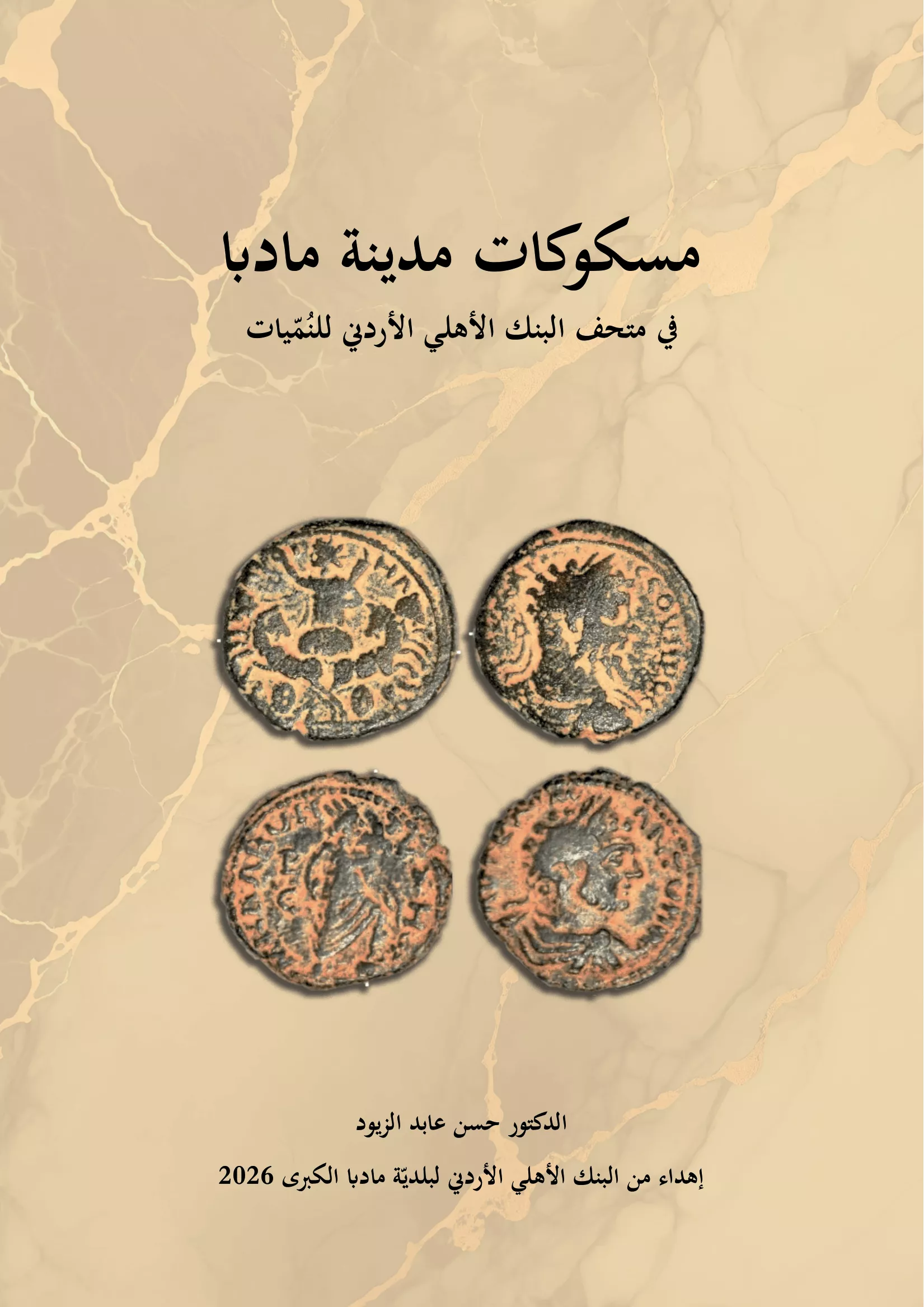
The Coinage of the City of Madaba
Museum Photo Gallery
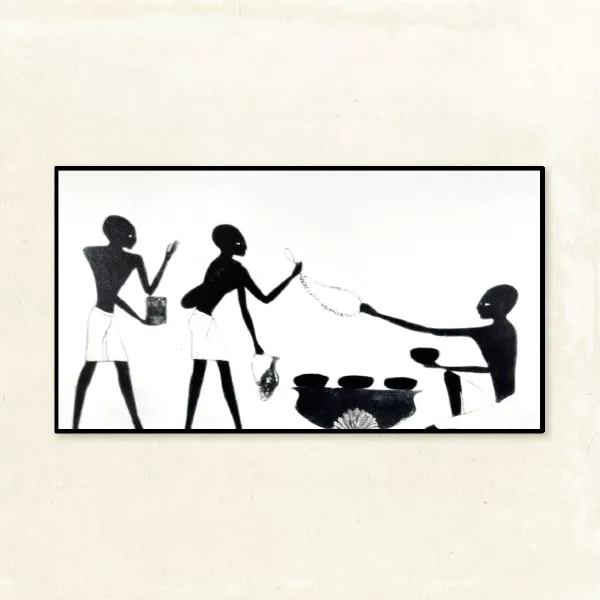
Egyptian fresco from Thebes
Depicting a barter scene, c.1500B.C, An Egyptian wall- painting from Bani Hasan the use of scales, balances, and weights, according to Miriani Balmuth.

KINGDOM OF LYDIA:
King Croesus (560-546 B.C):
Obverse: lion and bull. Oblong punch.
Reverse: divided into two squares.
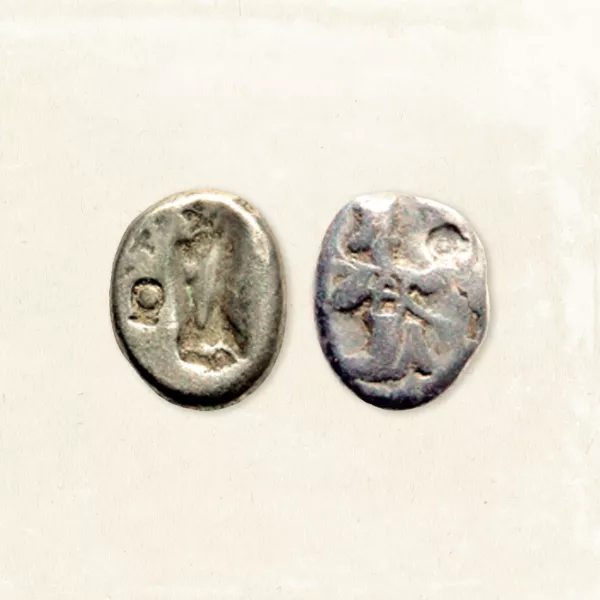
KINGDOM OF LYDIA:
Persian Imperial Coinage circa (486-450 B.C):
Obverse: Bearded archer (the Great King) kneeling, holding spear and bow.
Reverse: Oblong punch, in field to right small circular punch.
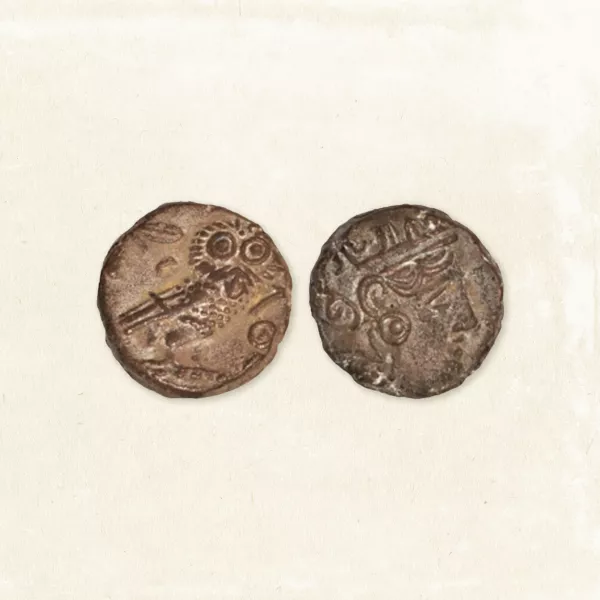
GREEK CITY- STATES:
ATTICA. Athens (510 B.C):
Obverse: Helmeted head of the city Goddess Athena.
Reverse: The owl, the sacred bird of Athena.
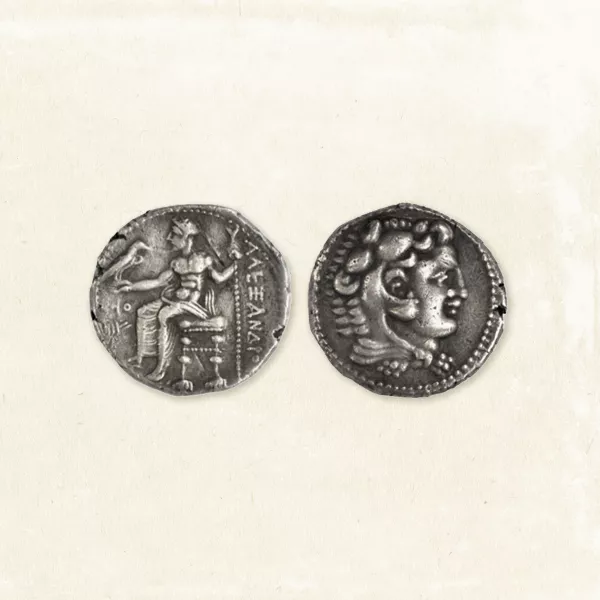
MACEDONIAN KINGDOM:
Alexander III (the Great) (336-323 B.C):
Obverse: head of young Herakles.
Reverse: Zeus, seated on a backless throne.
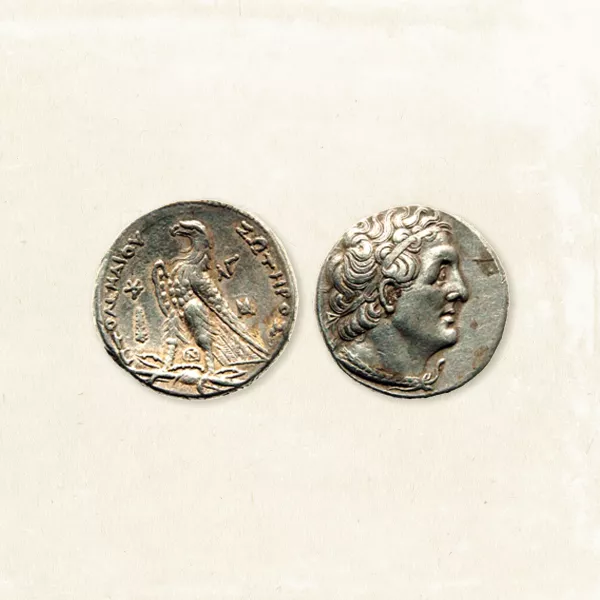
THE PTOLEMAIC KINGDOM OF EGYPT:
Ptolemy II Philadelphus (285-246 B.C):
Obverse: Head of Ptolemy II, right.
Reverse: Eagle, standing left on thunderbolt, in field to left club.

THE PTOLEMAIC KINGDOM OF EGYPT:
Cleopatra VII (69-30 B.C):
Obverse: Bust of Cleopatra right, diademed, in laureate-wreath.
Reverse: Tyche of Damascos, leaning left on rock, below: half figure of swimming river-God. Legend: ΔAMACKHNWN.
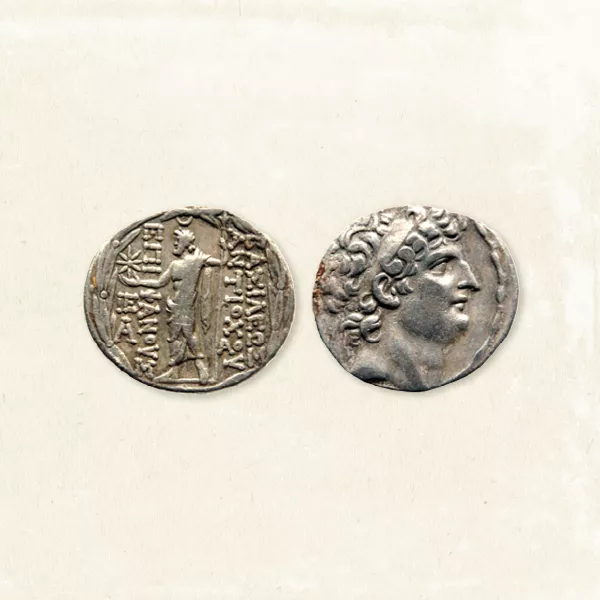
THE SELEUKID KINGDOM:
Antiochos VIII (121-96 B.C):
Obverse: head right.
Reverse: Zeus, standing left, holding star and scepter.
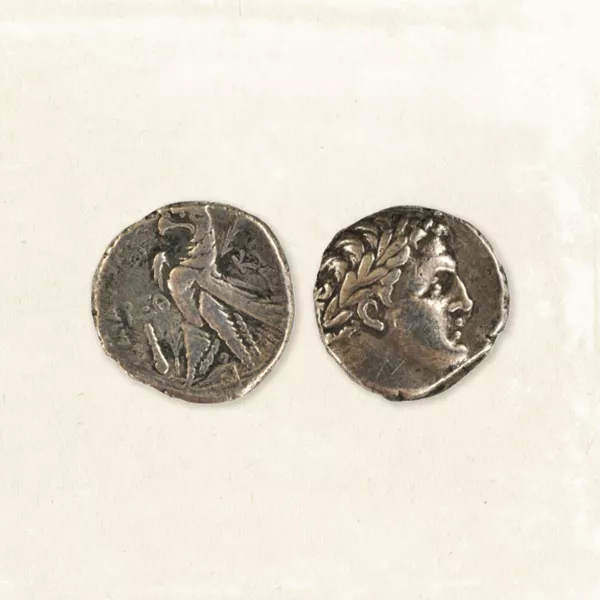
PHOENICIA:
Tyre
Obverse: head of Melkart.
Reverse: Eagle, standing left.
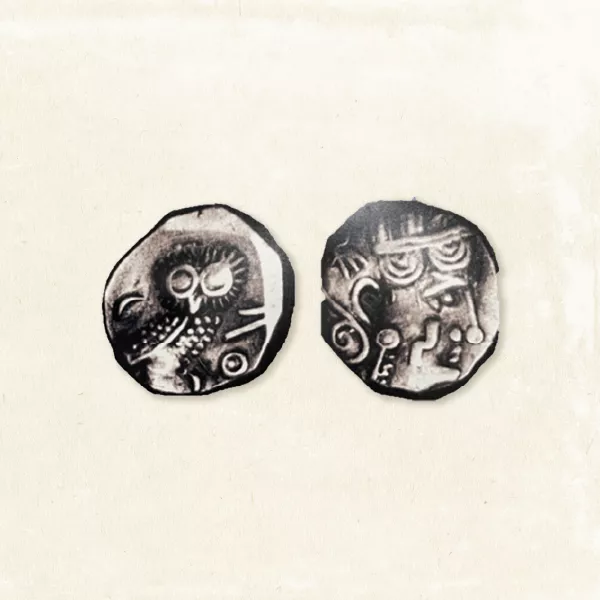
HIMYARITES (3rd-2ndCEN. B.C)
Obverse: head of Athena, wearing crested helmet, on cheek, Sabaean letter.
Reverse: Owl standing right, head facing.
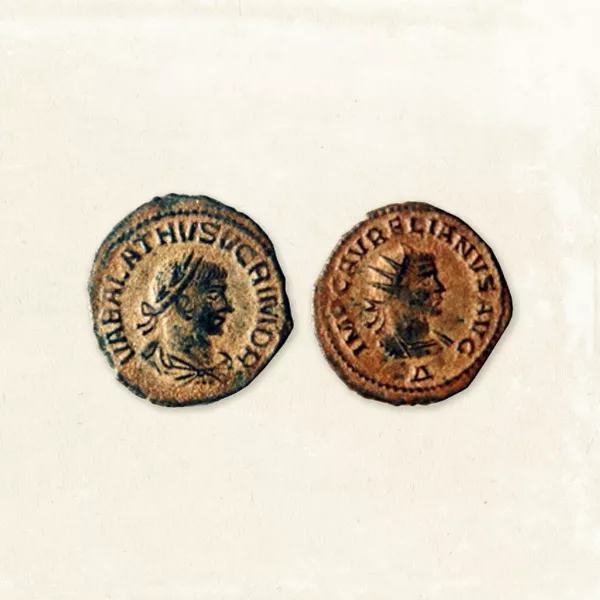
PALMYRA: Aurelian (270-275 A.D) Vableathus (271-272 A.D):
Obverse: Bust of Aurelian, radiate.
Reverse: Bust of Vableathus (271-272 A.D.) right.
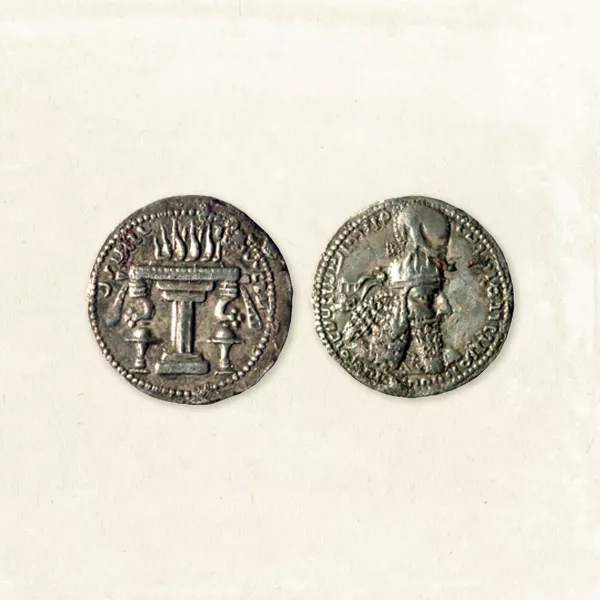
THE SASSANIAN EMPIRE:
Ardeshir I (226-240 A.D):
Obverse: Bearded bust of Ardeshir Iwearing close-fitting headdress with earflaps.
Reverse: Fire altar without attendants.
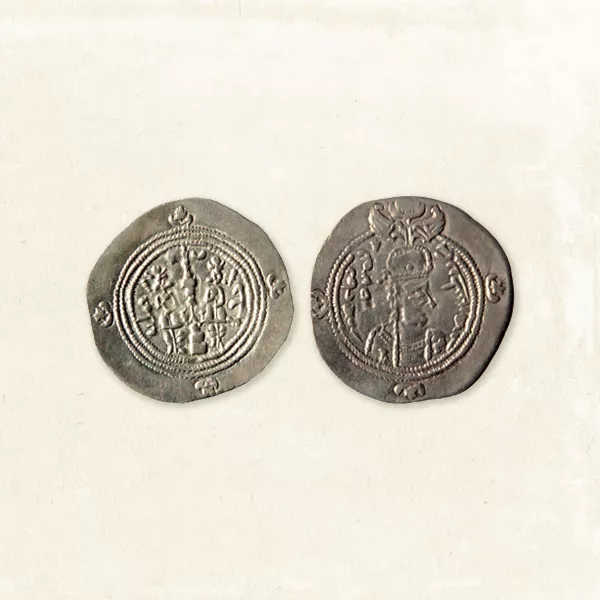
THE SASSANIAN EMPIRE:
Queen Boran: (630 – 631 A.D):
Obverse: Bust of Queen right with long hair and winged headdress. Right in Pehlevi: BURANU,Rev.
Reverse: Fire altar with two attendants. Right in Pehlevi: SK = SISTAN.
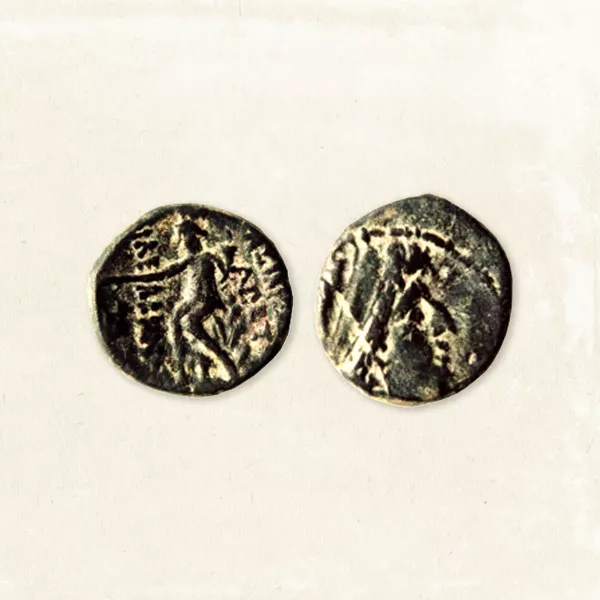
KINGDOM OF NABATAEA:
Aretas III, (84-71 B.C):
Obverse: diademed head of Aretas right.
Reverse: City- goddess of Damascos seated left on rock, right hand extended, holding cornucopiae in left; river-god swimming at feet, Greek legend behind, BAΣΙΛΕΩΣ∕APETOV; before ΦΙΛΕΛΛΗΝΟΣ
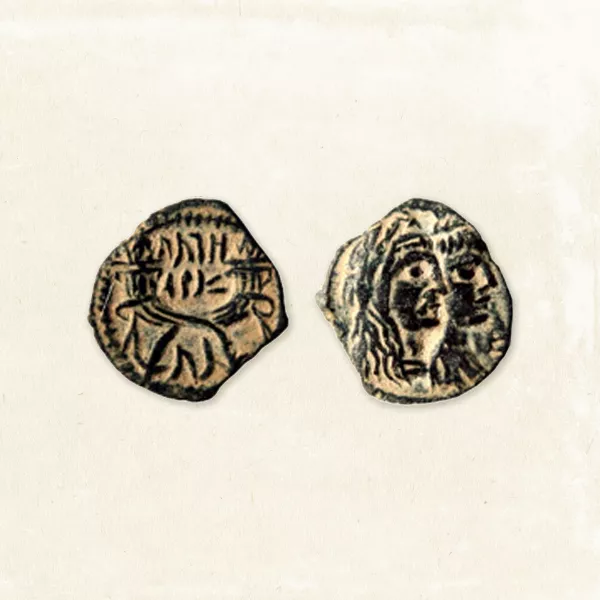
KINGDOM OF NABATAEA:
Aretas IV, (9 B.C-40.A.D):
Obverse: Jugate busts right of Aretas IV and of Shuqailat.
Reverse: Two cornucopiae crossed, between above, and below inscribed in three lines , Aretas /Shuqail/at.
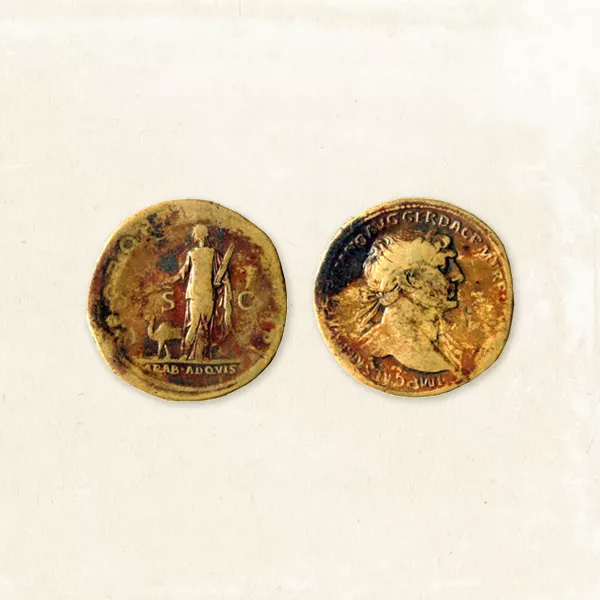
LOCAL COINAGES OF THE ROMAN EMPIRE (PROVINCIAL) COMMEMORATIVE COIN:
Hadrian (117-138 A.D):
Obverse: Bust of Hadrian.
Reverse: Arabia, standing front, head left, camel at her side, in exergue: ARAB ADQUIS.
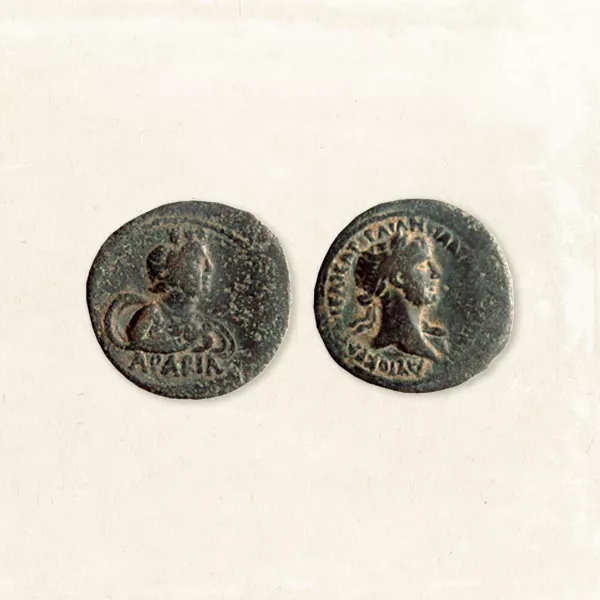
LOCAL COINAGES OF THE ROMAN EMPIRE (PROVINCIAL):
Hadrian (117-138 A.D):
Obverse: Bust of Hadrian.
Reverse: Bust of Arabia wearing turreted crown, holding in each arm small figure of a child (ARABIA).
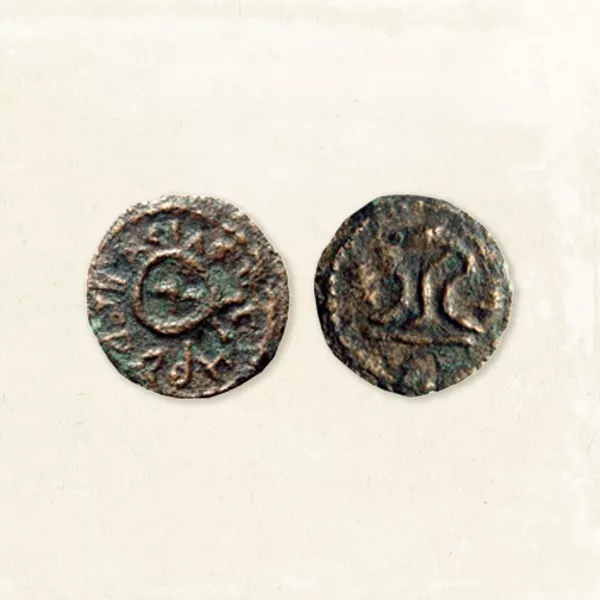
HERODIAN DYNASTY:
Herod I (the Great)(37-4 B.C):
Obverse: BACIΛΟC HPOΔΥ around diadem, containing cross, Reverse: Tripod table, flanked by palm-branches. (Herod ruled Judaea completely at the pleasure of Roman. His administration was Hellenistic in character).
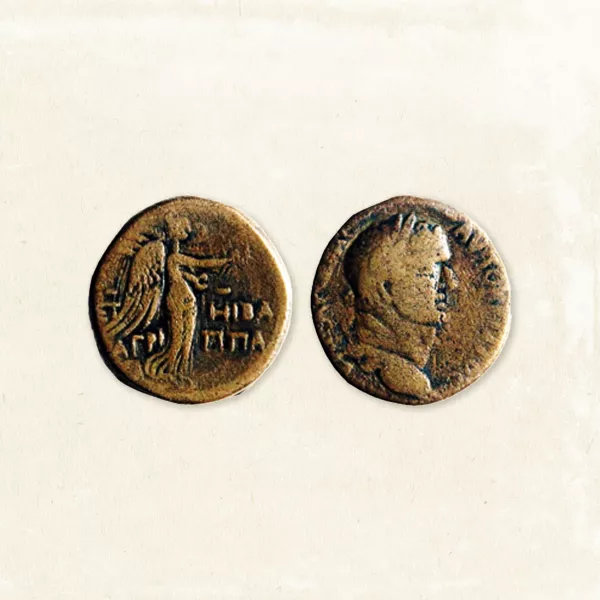
HERODIAN DYNASTY:
Agrippa II (56-95 A.D);
Obverse: Laureate bust of Titus (79-81 A.D) right.
Reverse: Nike advancing to right , holding wreath.
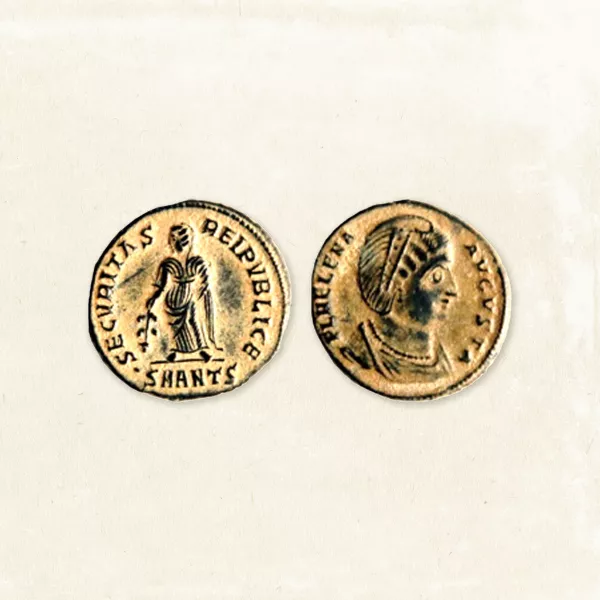
ROMAN:
Helena
Obverse: Bust of Helena, Reverse:Helena standing left, holding branch. She died in 328 A.D and was later canonised . (the mother of (Constantine the Great 307-37 A.D.) She was already eighty when she started her voyage from Constantinople to Jerusalem, where she discovered the true cross).
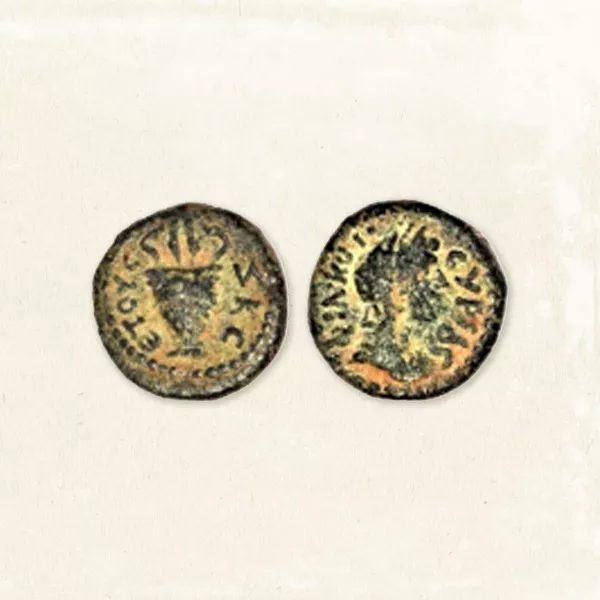
Philadelphia:
Obverse: Bust of Demeter, right. Margin: ΦІΛ.KOL.CYPIAC.
Reverse: Wicker basket, containing two ears of corn between two serpents

Charachmoba:
Elagabalus (218-222 A.D):
Obverse:Bust right, laurate.
Reverse: on right, figure seated left, before raised platform with steps leading up to it, on which is a tall column between two small baetyls
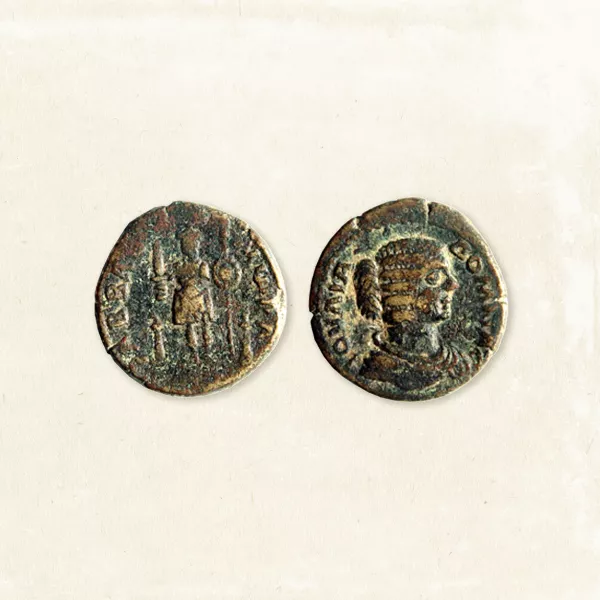
Rabathmoba:
Julia Domna wife of Septimius Severus (193 – 211 A.D):
Obverse: Bust r., draped hair in waves, taken up in a coil at back of head.
Reverse: War- god Ares, wearing helmet, cuirass and boots, holding in right, sword erect, in left, spear and round shield; standing facing on square basis; on either side flaming altar.
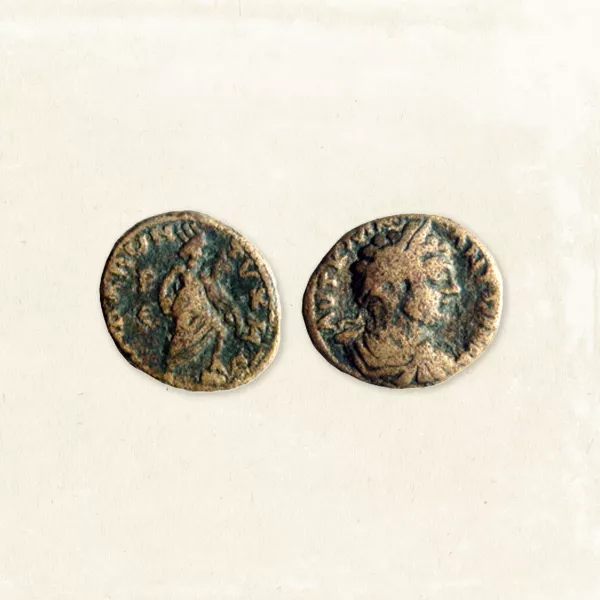
Medaba:
Caracalla (198-217 A.D):
Obverse: Bust right.
Reverse: Tyche, seated right, draped, left foot on prow holding in left hand cornucopiae.
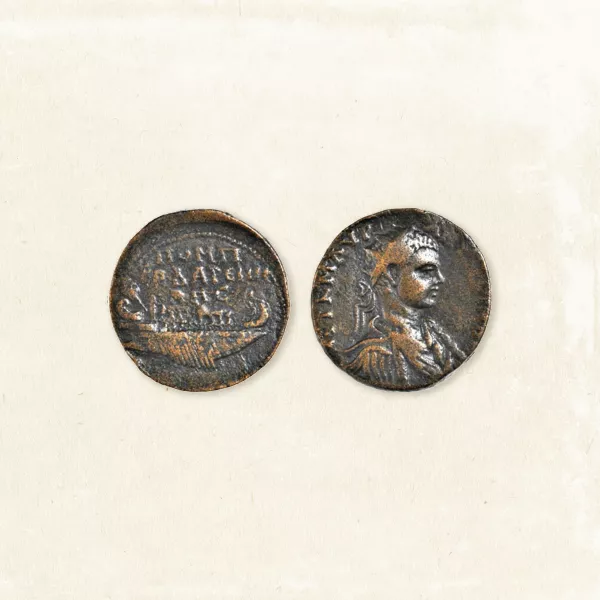
Gadara:
Elagabalus (218-222 A.D):
Obverse: Bust right.
Reverse: Galley, with captain, oarsmen, sailing left.
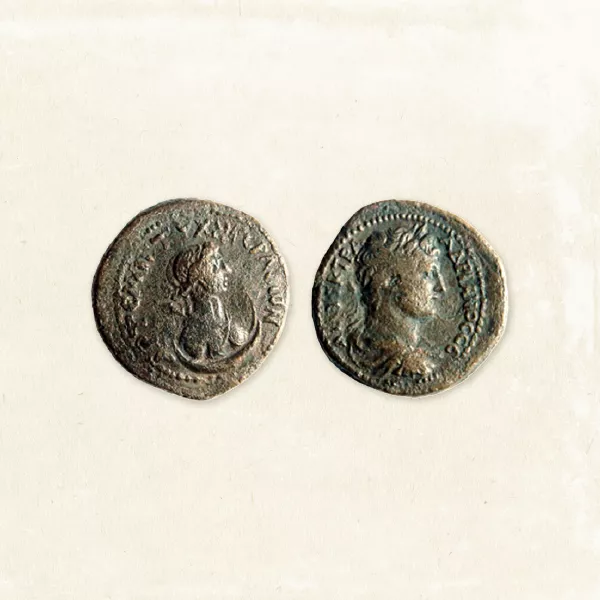
Gerasa:
Hadrian (117-138 A.D):
Obverse: Bust right laurated.
Reverse: Bust of Artemis-Tyche right, draped, quiver behind shoulder, in front bow, below crescent.
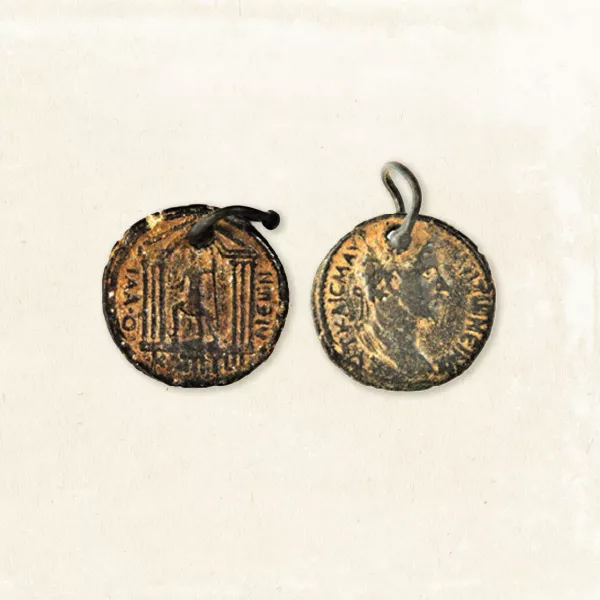
Capitolias:
Marcus Aurelius (161-180 A.D):
Obverse: Bust left.
Reverse: Hexastyle temple with central arch, Tyche standing left.
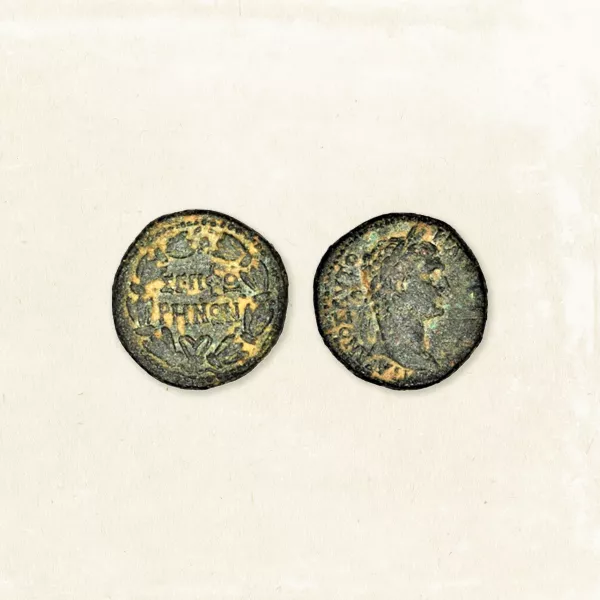
Diocaesaria – Sepphoris:
Trajan (A.D. 98– 117 A.D):
Obverse: Bust right laurated, undraped.
Reverse: In a heavy laurel- wreath, tied at bottom: εEπΦΩ∕PHNΩN
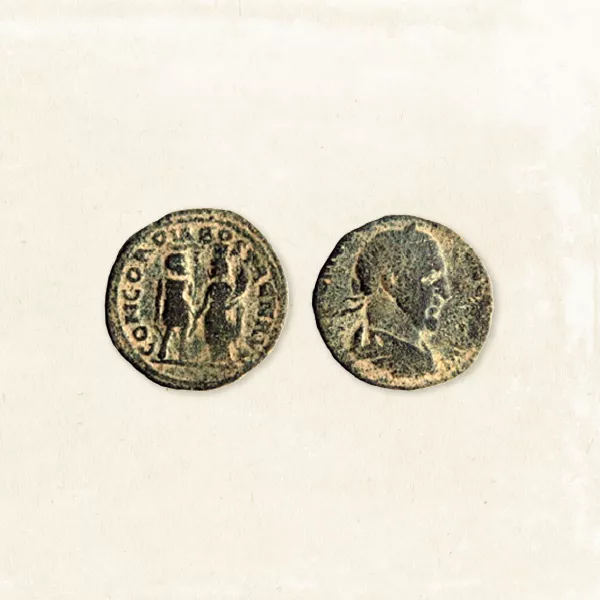
Bostra:
Trajan Decius (249-251 A.D) :
Obverse: Bust right.
Reverse: Zeus Ammon, standing right giving right hand to city-goddess standing left
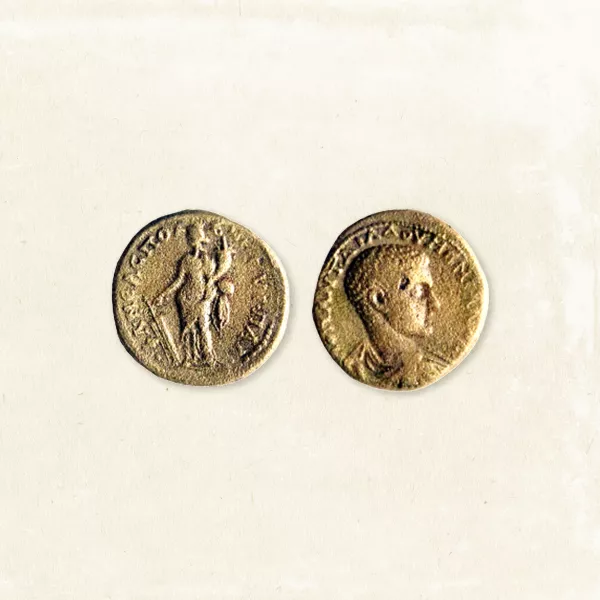
Neapolis:
Diadumenian (A.D. 217– 218 A.D):
Obverse: Diadumenian, bust right bareheaded, undraped.
Reverse: City –goddess, wearing turreted crown, long chiton, standing left. Right, resting on rudder, holding cornucopiae in left; around, inscr. ΦΛ NEA CΠΟΛ E WCCYP ΠAΛ.
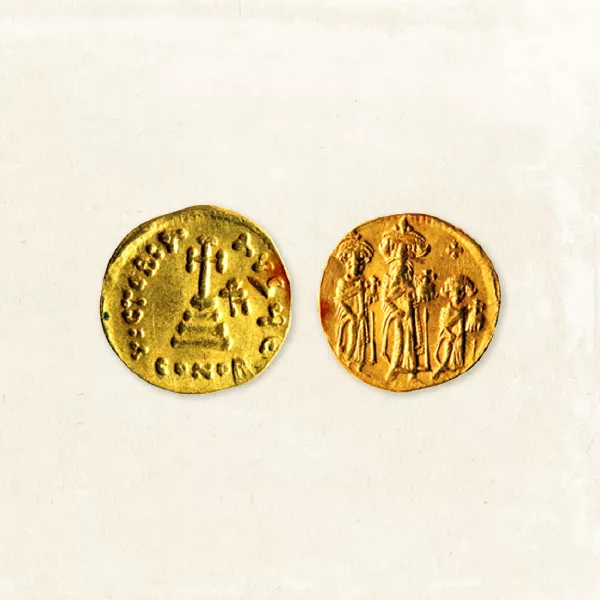
BYZANTINE:
Heraclius (610-641 A.D):
Obverse: In center, flanked by his sons, all standing facing, each holds globus surmounted by cross.
Reverse: cross potent on three steps, CONOB beneath.
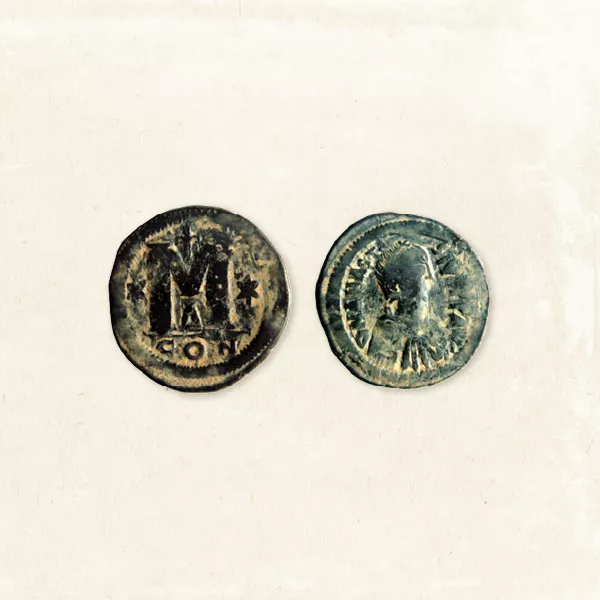
BYZANTINE:
Anastasius I (491-518 A.D):
Obverse: Bust of emperor right.
Reverse: Large M between two stars, above cross. Beneath officina letter A, in ex. CON.
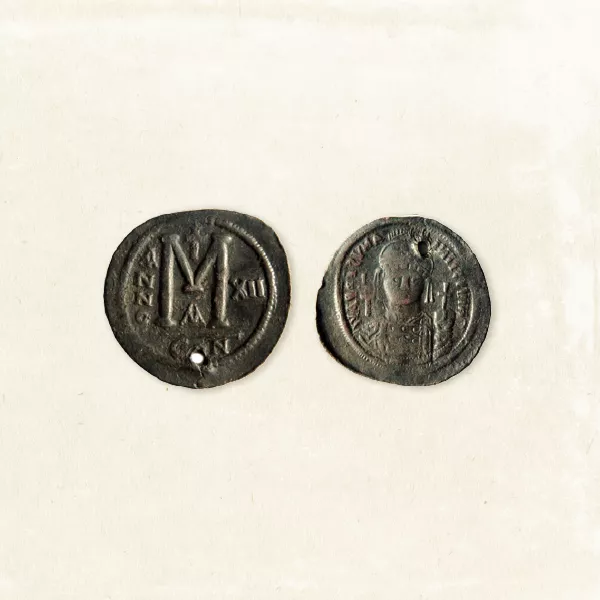
BYZANTINE:
Justinianus I (527-565 A.D):
Obverse: Bust of emperor facing.
Reverse: Large M between ANNO and XII representing the regnal year, above cross.Beneath officina A, in ex. CON.
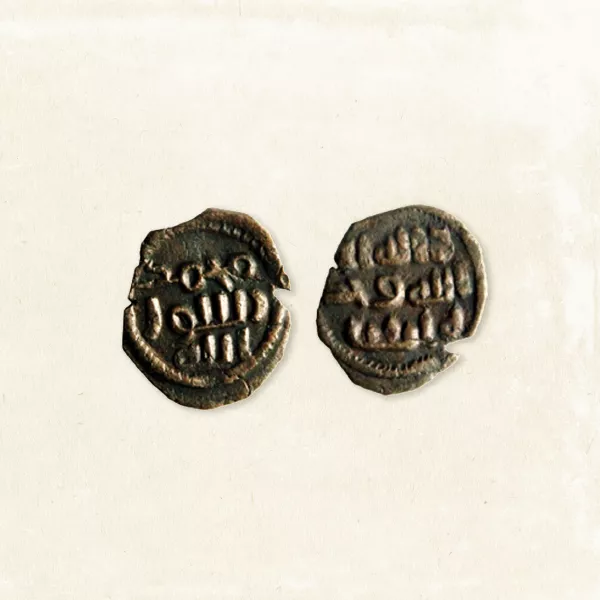
UMAYYAD: Post-reform (copper) coinage:
Mint-name Iliya (Jerusalem).
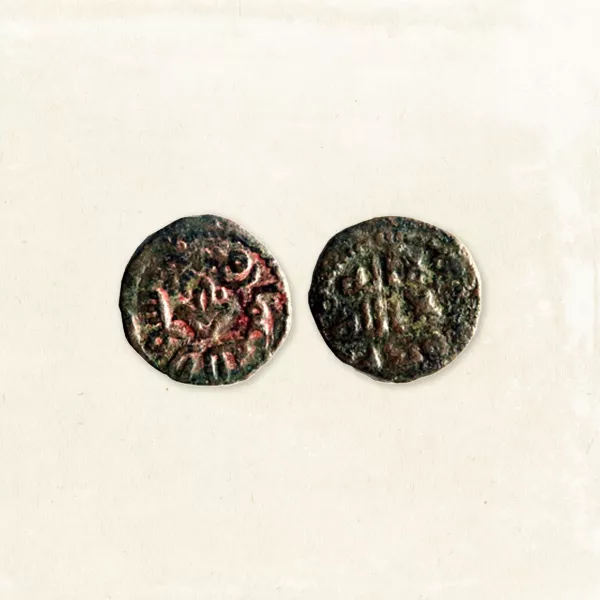
UMAYYAD: Post-Reform (Copper) Type:
Obverse: There is no God but God alone.
Reverse: In the field: Trefoil. Marginal legend: Mohammad is the Prophet of God, AMMAN.
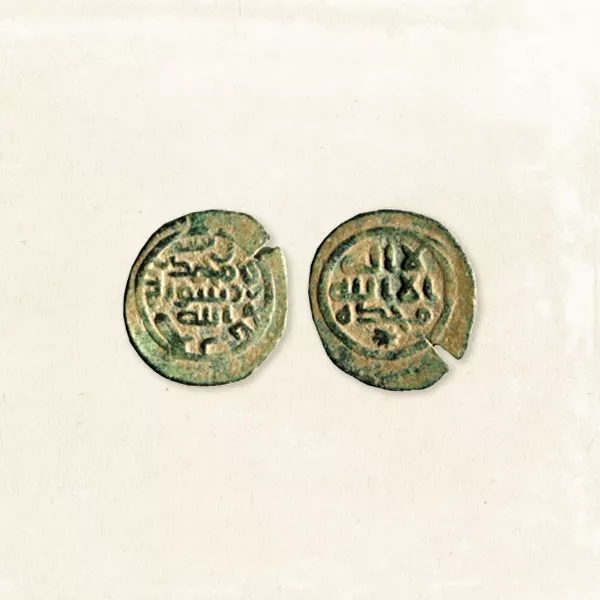
UMAYYAD: Post-Reform (Copper) Type: al-Urdun:
Obverse: There is no God but God alone.
Reverse: In the field: Mohammad is the Prophet of God.
Margin: In the name of God struck at al-Urdun
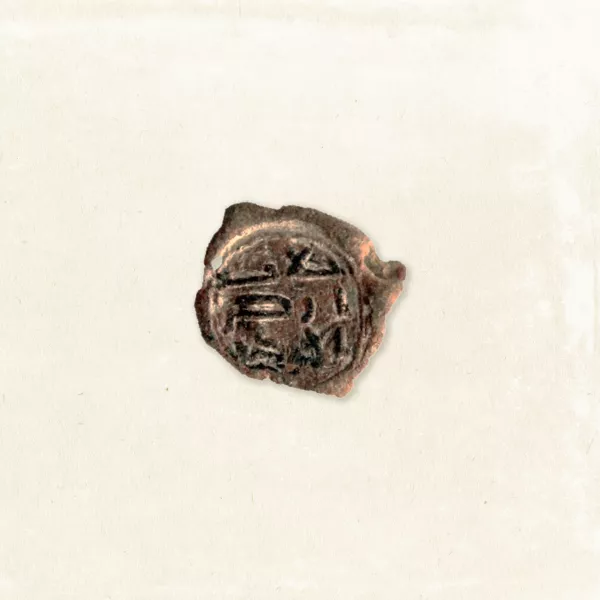
UMAYYAD: LEAD SEAL-IMPRESSION:
Obverse: The lord of the land of Jordan
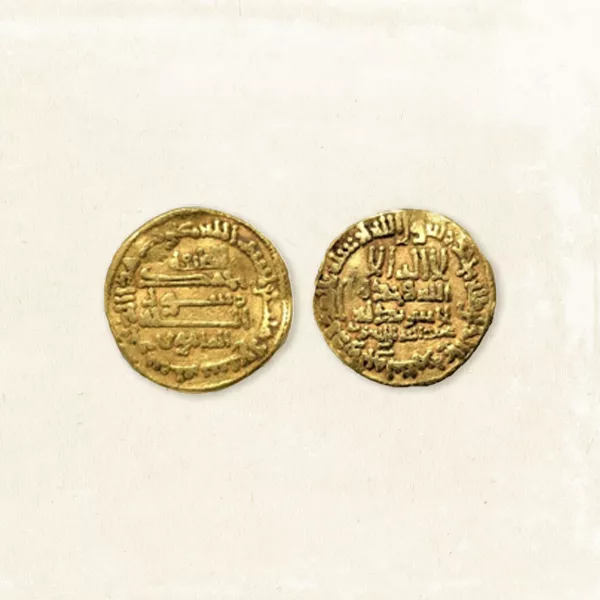
ABBASID: al-Ma’mun.
Obverse: There is no God but God alone he has no partner
Reverse: It belongs to the caliph. Mohammad is the prophet of god.
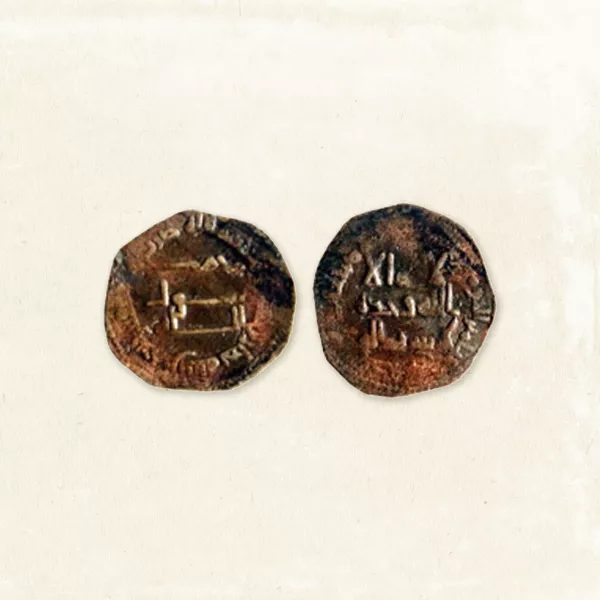
ABBASID FALS (UNIQUE): Amman
Obverse: There is no God but God alone He has no partner ,Margin: Mohammad is the Prophet of God.
Reverse: In the name of God this fals was struck at Amman in year 158
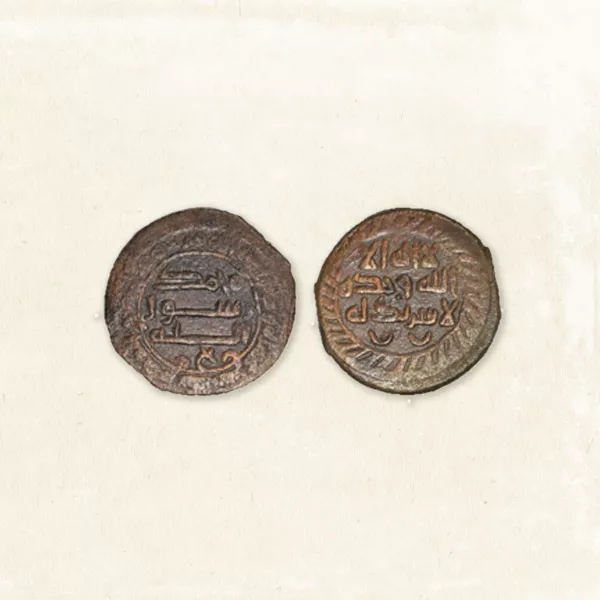
ABBASID: Anonymous tempore: al-Ma’mun, AE fals, al-Quds, year 217.
Obverse: There is no God but God alone He has no partner ,Margin: Mohammad is the Prophet of God.
Reverse: In the name of God this fals was struck at al-Quds in year 217, (This is the only coin which bears the mint name al-Quds, the Arabic name for Jerusalem).
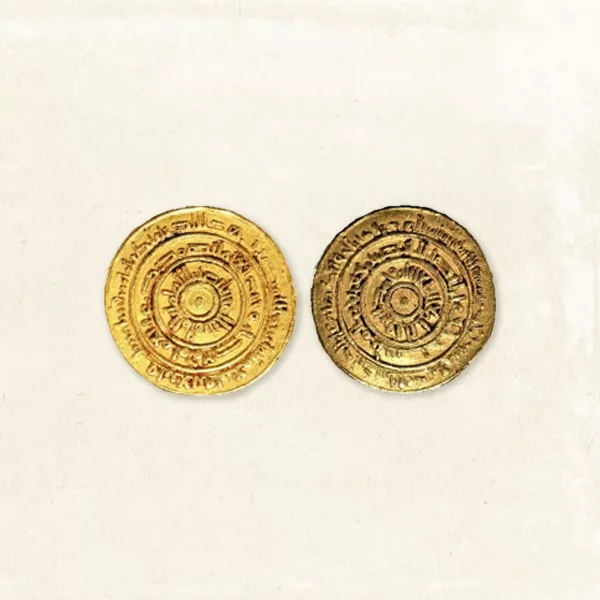
FATIMIDS:
The Imam Mu‘ad summons [all men] to the profession of the unity of the eternal God, citing caliph al-Mustansir bi Allah. Struck at Tripoli 446 ‘Ali is the most excellent of the commissioners (of God) and the best of the messengers
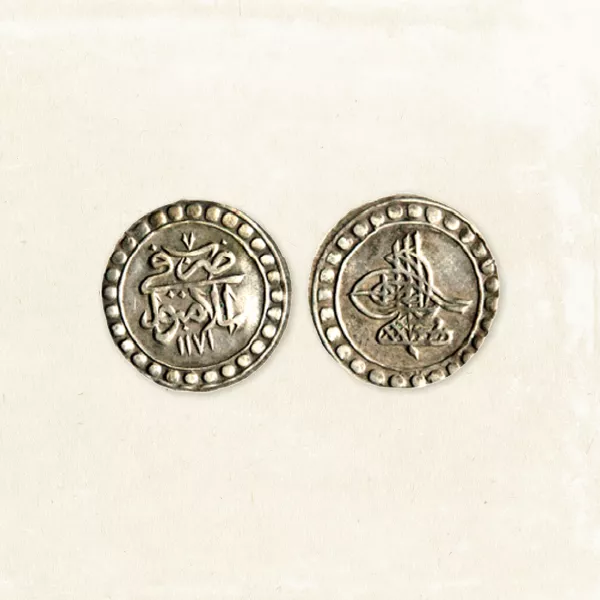
OTTOMANS:
Mustafa bin Ahmad (1171/1757–1187/1773).
Obverse: Name in Tughra Mustafa.
Reverse: Struck at Istambul in 1171 (the accession date 7).
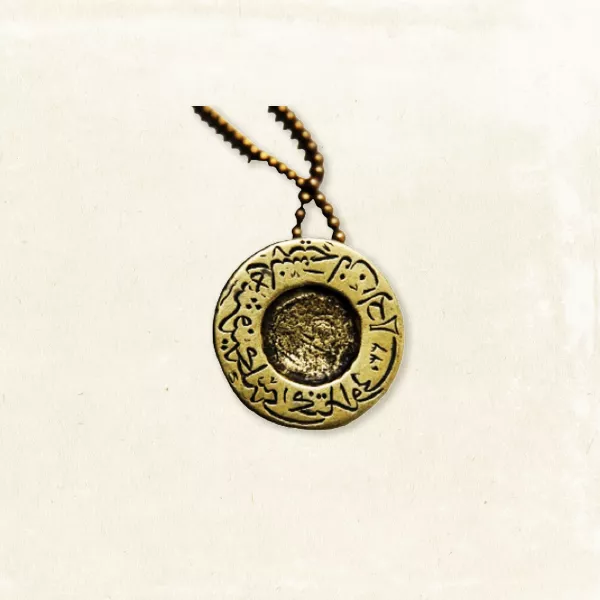
Seal of tribal notary for Amman, 1330a.h. = 1911-1912:
In 1878, Sultan Abdul Hamid II settled the Circassians in Amman Jerash and Wadi al-Sir
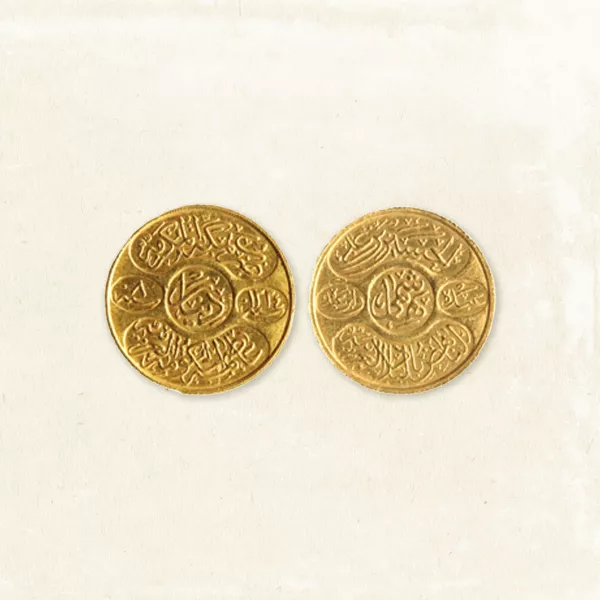
THE GREAT ARAB REVOLT: Shareef Husein.
On 10 June 1916 A.D. (9 Shaaban 1334 ah), Shareef Husein proclaimed Arab independence from Ottoman rule and declared the revolt from Mecca. He struck gold dinar, bearing his name as the leader of the Arab renaissance.
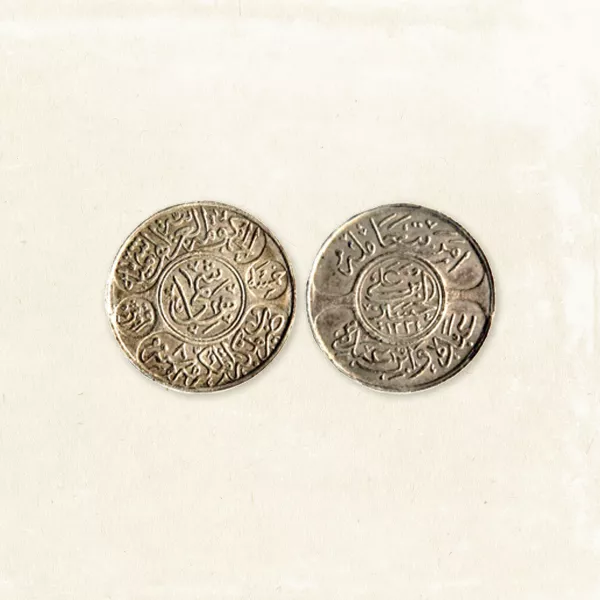
THE GREAT ARAB REVOLT: Shareef Husein.
Hashemite, Husien bin ‘Ali, AR five piasters, Makka al- Mukarrama 1334 regnal year 8.
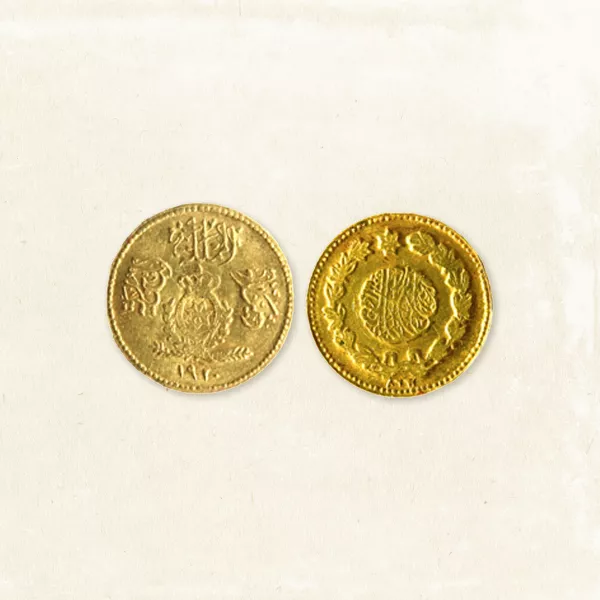
KINGDOM OF SYRIA : Faysal al-Awal:
In March 8, 1920 the General Syrian Congress met in Damascus and declared Syria and Palestine independent, with Faysal as king of the United Kingdom of Syria and Palestine. On that occasion a gold dinar was struck Obverse: In the field “Faysal al-Awal” with “1338”below, Reverse: star and shield surmounted by a crown, below 1920.
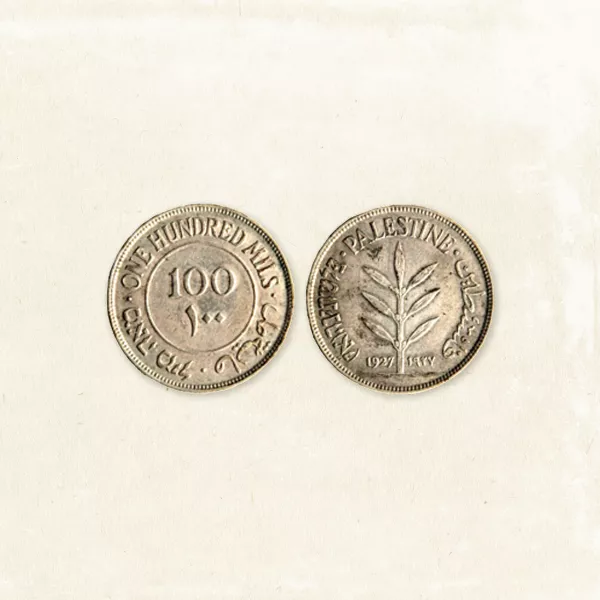
MANDATE GOVERNMENT:
Obverse: The olive branch in the middle separates the date in Arabic and English, surrounded by פלשתינה (אי) •1927 ١٩٢٧ PALESTINE • فلسطين, Reverse: Within a circle: 100/١٠٠ מאה מיל • ONE HUNDRED MILS • ماية مل •
Museum Location & Address
The Jordan Ahli Bank Numismatic Museum is located at the Bank’s Head Office building in Amman – Queen Noor Street, Shmeisani. Admission is free and the museum is open to the public every day except Fridays, Saturdays, and official and religious holidays, from 9:00 a.m. to 3:00 p.m.
- Email: [email protected]
- Telephone: 96265666911 Ext. 1091